Bolaño has joined the immortals.

The Washington Post

Roberto Bolaño

Born in Santiago, Chile, Roberto Bolaño (1953–2003) moved to Mexico City with his family in 1968. He went back to Chile in 1973 to “help build socialism” (as he wrote in his story “Dance Card”), but less than a month after his return Pinochet seized power. Bolaño was arrested and imprisoned in Concepción. After his release, he returned to Mexico before moving to Paris and then on to Barcelona. Bolaño has been acclaimed as “the real thing and the rarest” (Susan Sontag), “a spellbinder” (Newsweek), and “never less than mesmerizing” (Los Angeles Times). Winner of many prizes, including the Premio Herralde de Novela and the Premio Rómulo Gallegos, Bolaño wrote ten novels, two collections of short stories and five books of poetry before he died at the age of 50, on July 15, 2003.
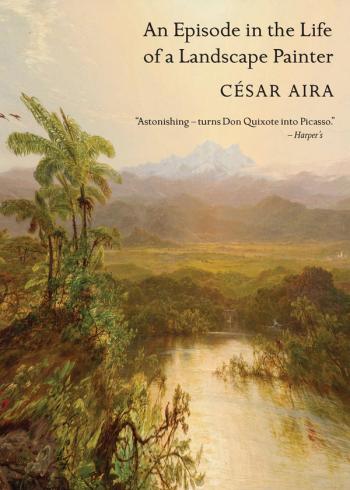

cover of the book An Episode in the Life of a Landscape Painter

An Episode in the Life of a Landscape Painter

Fiction by César Aira

Translated from Spanish by Chris Andrews

With a contribution by Roberto Bolaño

An Episode in the Life of a Landscape Painter is the story of a moment in the life of the German artist Johan Moritz Rugendas (1802-1858). Greatly admired as a master landscape painter, he was advised by Alexander von Humboldt to travel West from Europe to record the spectacular landscapes of Chile, Argentina, and Mexico. Rugendas did in fact become one of the best of the nineteenth-century European painters to venture into Latin America. However this is not a biography of Rugendas. This work of fiction weaves an almost surreal history around the secret objective behind Rugendas’ trips to America: to visit Argentina in order to achieve in art the “physiognomic totality” of von Humboldt’s scientific vision of the whole. Rugendas is convinced that only in the mysterious vastness of the immense plains will he find true inspiration. A brief and dramatic visit to Mendoza gives him the chance to fulfill his dream. From there he travels straight out onto the pampas, praying for that impossible moment, which would come only at an immense price—an almost monstrously exorbitant price—that would ultimately challenge his drawing and force him to create a new way of making art. A strange episode that he could not avoid absorbing savagely into his own body interrupts the trip and irreversibly and explosively marks him for life.

Bolaño has joined the immortals.

The Washington Post

Bolaño has joined the immortals.

The Washington Post

Tres is not just a Robert Bolaño masterpiece, it’s another Bolaño masterpiece…Bolaño’s talent resides in his ability to transport the reader to the precipice of so many things, not the least of which is a euphoric whirlwind of delight. Tres is a beautiful book that transports the reader in many strange and wonderful ways.

World Literature Today

Bolaño is always refreshing to read because things are never what they seem.

Randy Rosenthal, Tweed's Magazine

Bolaño’s spare prose lends his narrator’s account a chilly precision.

The New Yorker

As for Bolaño, what can one say? One of our greatest writers, a straight colossus.

Junot Diaz

A Little Lumpen Novelita is a piece of intelligent realism without any sermons.

El País

A Little Lumpen Novelita is brave and beautiful, a ‘quiet storm’ that reminds us what a joy it is to read Bolaño’s intimate writing.

Revista Rocinante

Reading Between Parentheses is not like sitting through an air-conditioned seminar with the distinguished Señor Bolaño. It’s like sitting on a barstool next to him, the jukebox playing dirty flamenco, after he’s consumed a platter of Pisco Sours. You may wish to make a batch yourself before you step onto the first page.

Dwight Garner, The New York Times

Antwerp is a total avant-garde freakout, and among the most beautiful things Bolaño wrote.

The Millions

A spellbinder.

Newsweek

Something extraordinarily beautiful and (at least to me) entirely new.

Francine Prose, The New York Times Book Review

Never less than mesmerizing.

Los Angeles Times

The very highest level of literary achievement.

Colm Tóibín

An exemplary literary rebel.

Sarah Kerr, The New York Review of Books

They radiate the audacity of intellect, as well as the cruelty of vision, that have won their author a devoted following.

Boston Review

Bolaño, the phantom mega-star of global fiction since his death in 2003, thought of himself as a poet first and a novelist second. In verse, as in prose, Bolaño leads us on journeys through a surreal landscape of exile, longing, and nostalgia.

The Independent

We savor all he has written, as every offering is a portal into the elaborate terrain of his genius.

Patti Smith

They radiate the audacity of the intellect, as well as the cruelty of vision, that have won their author a devoted following.

Boston Review

Peers at the infinite through compelling, surreal and cinematic poems … beautiful.

The Faster Times

Bolaño teeters on the brink of fantasy, but without ever detaching himself from a concrete, material world of pain and pleasure.

Will Heyward, The Australian

Bolaño was hungry, this book reminds you, for just about everything.

Dwight Garner, The New York Times

Its most recent poems were written fifteen years after its earliest, and many of these newer ones remind us of all the reasons why Bolaño is such a fantastic writer, one of the best of our times.

The Millions

Its complexities amaze and treat us to an unexpected magical experience that one can sit down reading for hours until our eyes and brain go numb . . .

Gozamos Magazine

The sense of embattlement that animates the writing, and the scab-picking intensity that he brings to his obsessions, makes The Return a compelling encapsulation of Bolaño’s work.

Los Angeles Times

Genius: This new collection of thirteen stories proves to be a defining sampler of Bolaño’s style, thematic concerns and favored character types.

Booklist

Bolaño succeeds in conjuring the unknowable empty spaces that an obsessive mind can imagine into the private lives of others.

The Rumpus

Despite its rawness, the brilliance is still there.

Daily Kos

A living, breathing, true-to-life mystery with so many shades of exposure, the story’s inconclusiveness seems preordained, exquisitely inevitable.

The Millions

There is something we take away from each of them, some phrase that stops us dead with admiration, or a vision that plunges us far beyond the surface of the prose.

The Nervous Breakdown

Paragraphs demand to be reread, because they give you the feeling that you’ve missed something. You did miss something, but you won’t find it in the printed words. It’s the space around the words where you’ll find the answer.

The Coffin Factory

It’s a glimpse into the process of a totemic artistic figure.

The A.V Club

Bolaño’s writing is reliably intriguing.

Publishers Weekly

Bolaño’s febrile narrative tack and occasional surreal touches bring to mind the classics of Latin American magic realism his cerebral protagonist and nonfiction borrowings are reminiscent of Thomas Bernhard and W. G. Sebald. The novel, Bolaño’s first to be translated into English, is at once occasion for celebration.

The New York Times

The most influential and admired novelist of his generation in the Spanish-speaking world.

Susan Sontag, Los Angeles Times Book Review

Bolaño was no political pamphleteer. And yet his characters’ angst and desires play out against the canvas of history. With his raw, barely controlled emotions, and a talent for mining the pathos, beauty, and even humor amid the horror of ordinary life, his fiction soared.

The Daily Beast

That dream, its stubborn survival despite all evidence of its defeat, would become the subject of much of Bolaño’s writing.

Ben Ehrenreich, The Arabophile

If you haven’t heard of Roberto Bolaño yet, you will soon.

Benjamin Lytal, New York Sun

Bolaño’s reputation and legend are in meteoric ascent.

Larry Rohter, New York Times

He is by far the most exciting writer to come from South of the Rio Grande in a long time.

Ilan Stavans, Los Angeles Times
Scroll to Top of Page