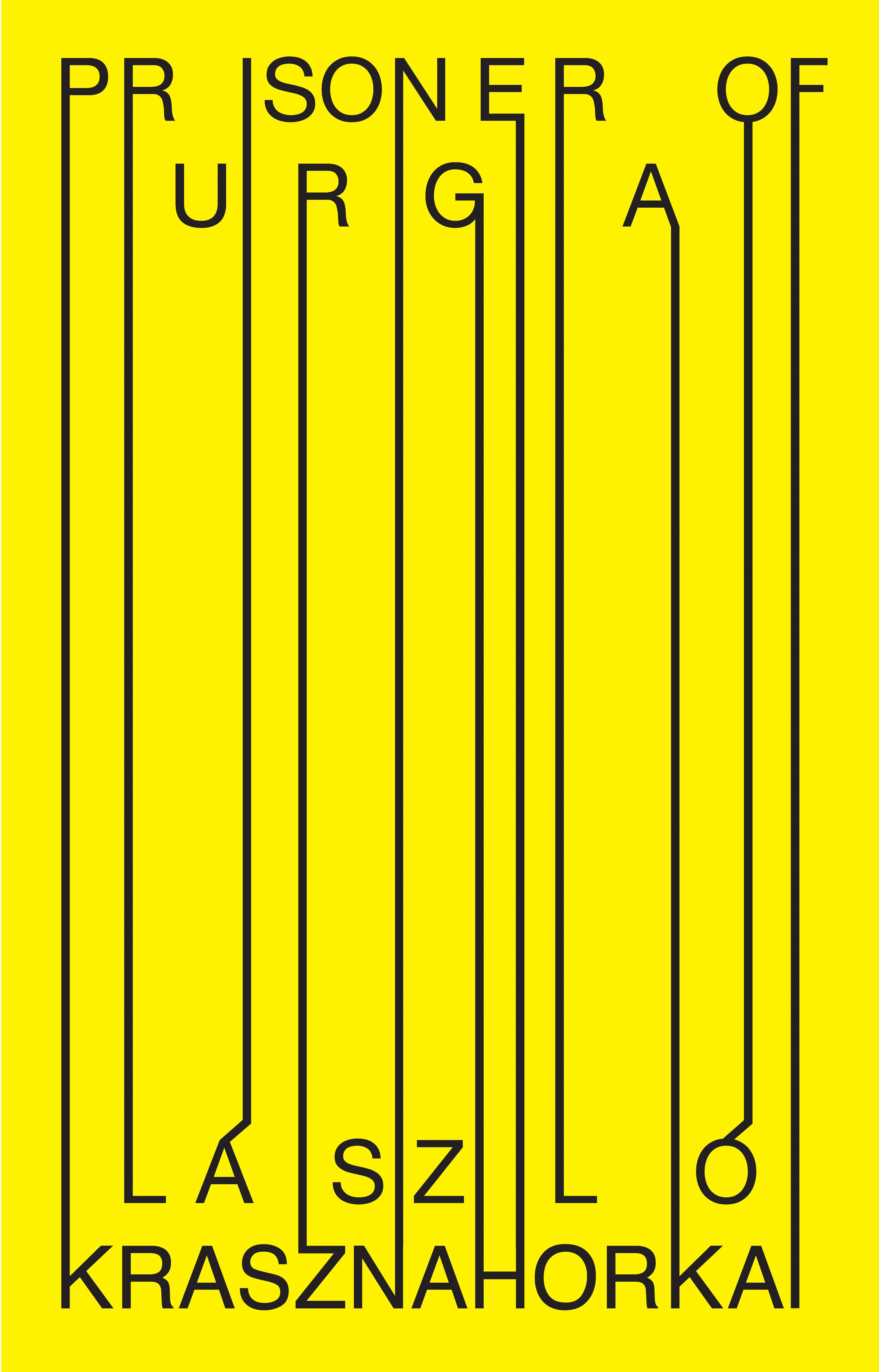
The Prisoner of Urga
Fiction by László Krasznahorkai
Translated from Hungarian by John Batki
In this book of journeys—to enlightenment? to a way out of a terrible life crisis? to the Celestial Empire? to a meeting with the gods?—a holy fool of a character named László Krasznahorkai travels for days and days across the Gobi Desert by train. Past vistas of empty vastness worthy of Kafka’s China, László enters into insoluble metaphysical thickets but finally gets beyond the Mongolian border and into Beijing. Always searching for contact with the divine, László struggles through terrifying traffic to holy sites and temples (as well as to an exclusive, horrifying restaurant). But only on László’s very last night in China, at a famous Beijing theater, does he encounter the divine—in a most unlikely guise. The remarkable Prisoner of Urga, long overdue in English, is an early masterwork from the world’s newest Nobelist—and a strange, chewy, and ever-surprising delight.
Paperback
published: February 9, 2027
- ISBN:
- 9780811240833
- Price U.S.:
- 17.95
- Trim Size:
- 5 3/8 x 8
- Page Count:
- 192